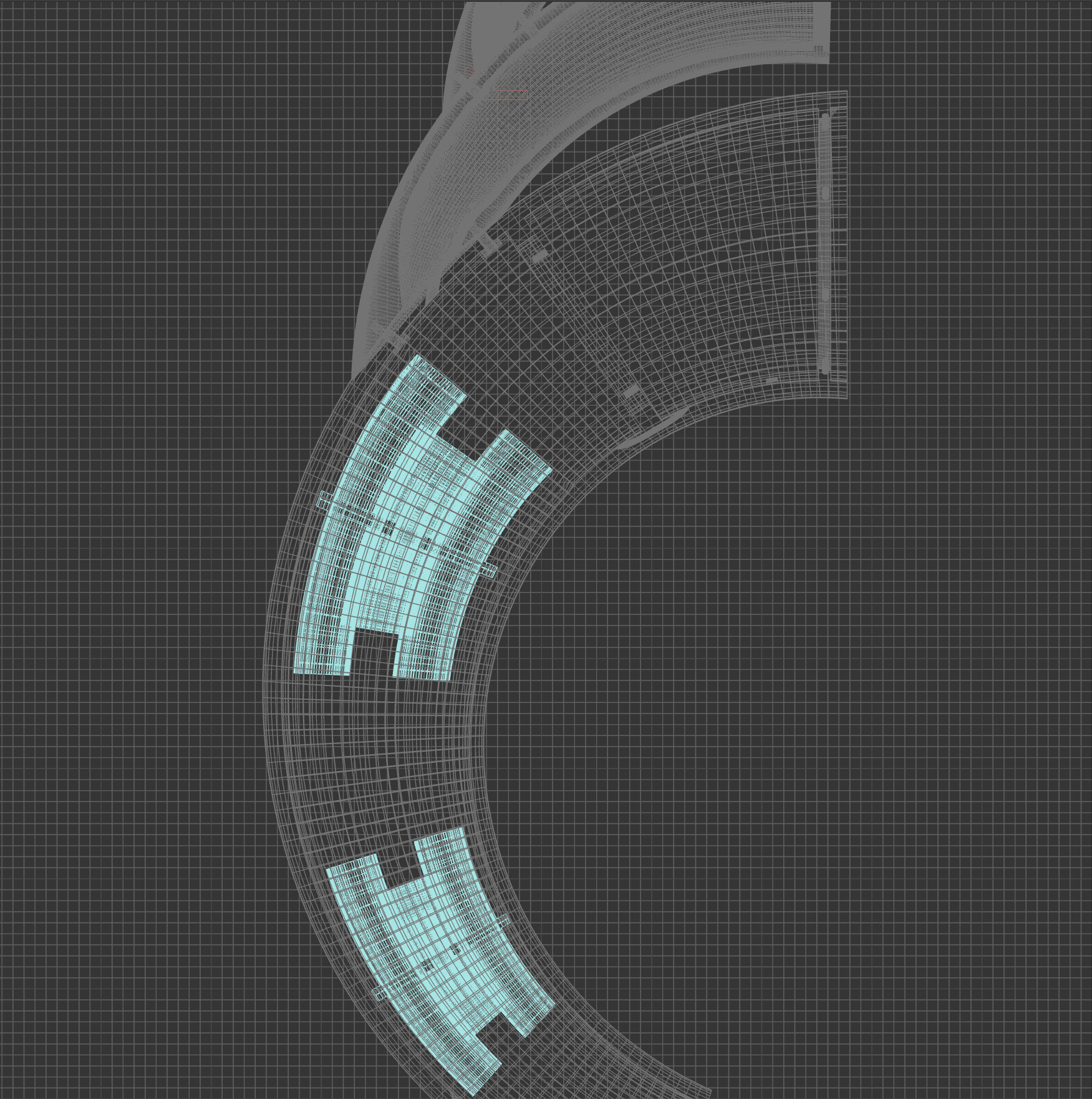
The box is made from 3D-printed PET-G (polyethylene terephthalate glycol), which is strong and durable. It withstands sunlight well and does not get damaged up to 90-100 degrees Celsius. The elements of the box are printed at temperatures between 240-250 degrees Celsius. The wall thickness of the box varies between 10-20 mm on average, (depending on the model). For example, around the woofer, the wall is 16-20 mm thick, while at the lower part of the tube, it reduces to only 10-12 mm (depending on the model). This method reduces the resonance of the box.
For instance, in traditional MDF and wooden materials, the uniform thickness can cause resonance at a certain frequency. With uSound boxes, this issue has been successfully addressed. The outer and inner layers of the walls are connected by a special GIROD (S-shaped) filler at 10-20%, which channels the internal resonance to the outer layer. Since resonances that are harmful to the sound image occur on the outer wall, a special "concrete filler" absorbs 98% of these resonances.
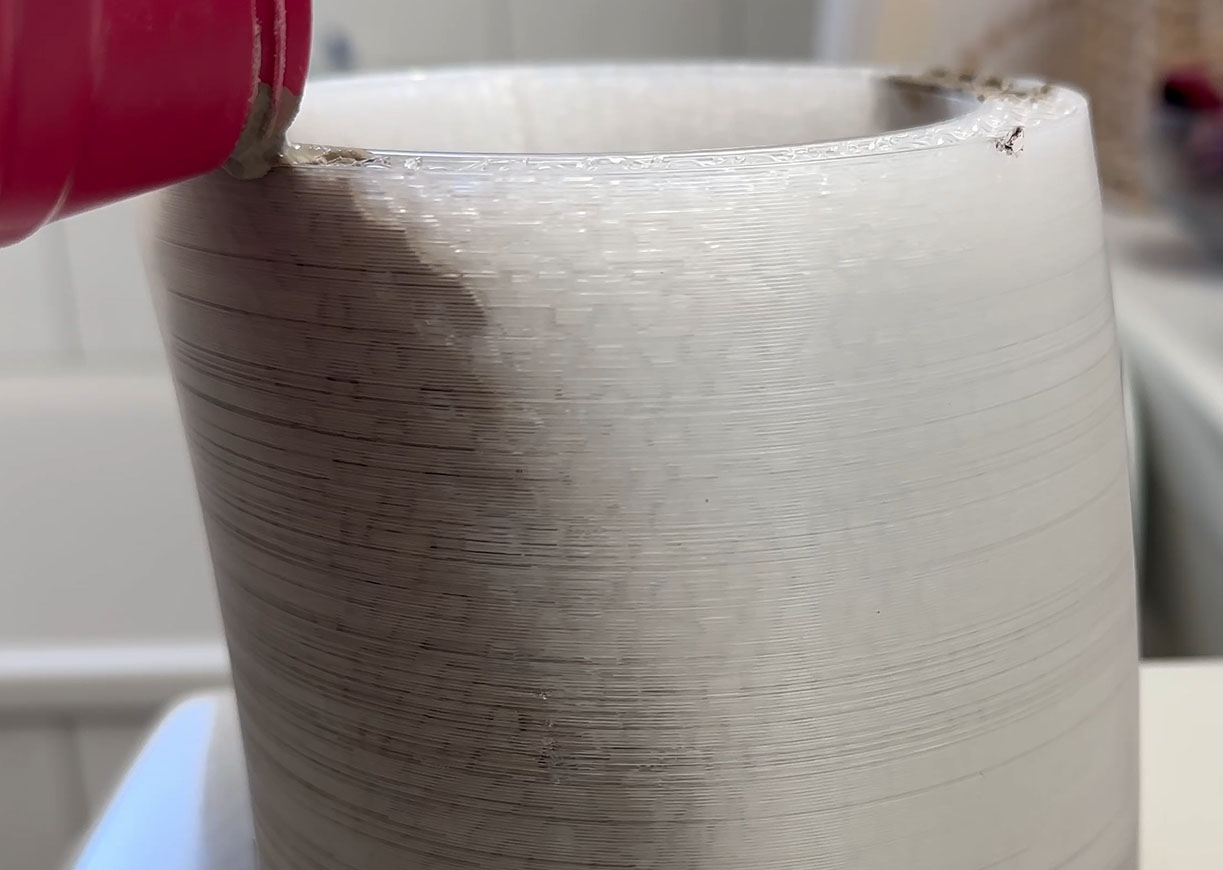
Between the outer and inner walls of the PET-G components, a specially developed concrete is used. The special powder mixture is diluted with water to a nearly liquid consistency, allowing it to fill gaps between the walls up to 2-3 micrometers (µm) in size. The binding agents are Portland cement and calcium sulfate.
Portland Cement: The main binding agent in the mixture, which provides strength and durability to the material.
Calcium Sulfate: Assists in the hydration and setting of the cement, and improves the even distribution of the mixture.
The particle size ranges from 2 micrometers (µm) to 0.5 millimeters (mm) in diameter. The material is highly versatile. It includes sand particles, andesite, basalt, dolomite, and tuff aggregates. Additionally, it contains various polymers, such as redispergable latex and styrene-butadiene. The material also includes additives to enhance its self-leveling properties.
For the specific concrete exposed to harmful and continuous resonance, polypropylene fibers were mixed in, which are 3-6 millimeters (mm) long and 3-8 micrometers (µm) in diameter. These fibers are intended to increase crack resistance. Overall, an excellent sound-absorbing material has been created.
The surface of the printed and filled components is roughened with a special chemical, followed by spraying with a binding enhancer. This additive will bond with a 2K gap filler (spray filler), which is applied to the components in a thickness of approximately 0.3-0.6 mm. After this, wet sanding is performed to ensure a perfectly smooth surface, onto which a 2K primer is applied. After minimal sanding, an extremely hard 2K paint is applied in two layers (each approximately 0.2 mm thick). Following another round of wet sanding, a 2K high-gloss lacquer is applied in three layers. The final step is polishing. All sanding phases are carried out by hand due to the curves of the body that cannot be handled by machines. Only the final phase of polishing is done with a machine.
The speaker systems are of the Isobaric Hybrid Line-Loaded types (except for the Antilop model). The bass chamber is divided into three separate compartments, each connected by three different frequency-tuned resonators. These resonators are tuned to the antiphase of the standing waves generated within the tube. This method allows for the enhancement of frequencies by 3 dB, depending on the music genre.
The main advantage of this system over traditional "cube" speakers is that it lacks corners where frequencies could accumulate, thus preventing a boomy, delayed bass sound. With uSound speakers, we achieve precise and accurate bass that faithfully reflects the true sound. For example, the fundamental 41.2 Hz tone of a bass guitar will not sound boomy or muddled, instead, it will be reproduced with clarity and precision because there are no corners in the speaker to blur the clean, lifelike sound.
Our speakers are designed to deliver sound frequencies in a more directed manner, reducing the impact of room acoustic imperfections while preserving the natural spatial experience. This design allows listeners to enjoy an exceptionally clear, lifelike soundstage.
A common issue with traditional speakers is that the front panel often acts as a reflective surface, distorting and altering the soundstage. We have completely eliminated this problem by removing all reflective surfaces. The essential mounting surfaces have been re-engineered with a specially designed funnel-like shape, allowing even these elements to serve the pure sound experience, ensuring uncompromised clarity.
Every detail of our speakers is crafted to deliver the highest quality listening experience, so that the sound retains its fidelity and spatial presence.
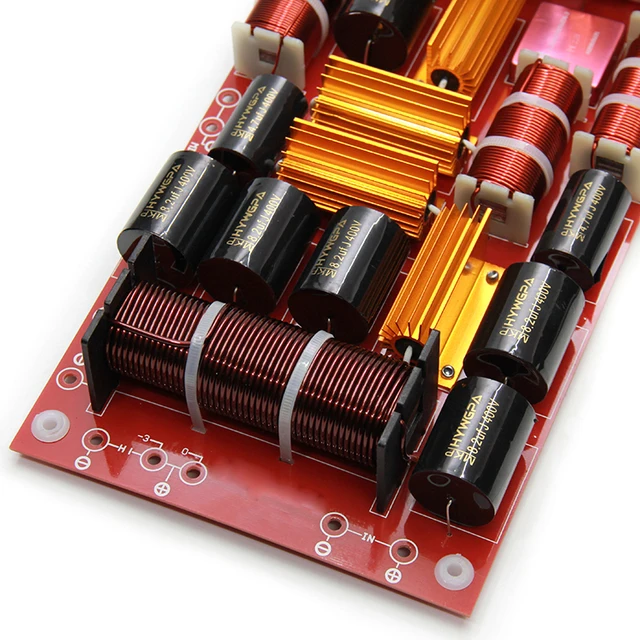
Our speakers use a 2nd Order Bessel crossover with a 12 dB/octave slope, ensuring linear phase behavior and precise impulse response. This contributes to creating a clear, detailed sound. The crossover accurately divides the different frequencies among the appropriate drivers, so every sound is delivered with the best possible quality. The electronics are built from carefully selected, high-quality components that guarantee durability and stable performance.
For the Elephant and Mamut models, we have placed a switch on the rear connector panel, allowing for midrange driver attenuation with selectable levels of 0 dB, -3 dB, and -6 dB. This feature enables fine-tuning, allowing the listener to tailor the speaker’s character to different musical genres.